Before men learned to divide history into ages, before kingdoms carved borders into the earth and called them eternal, there was Yao Ke.
The Hidden Ruler
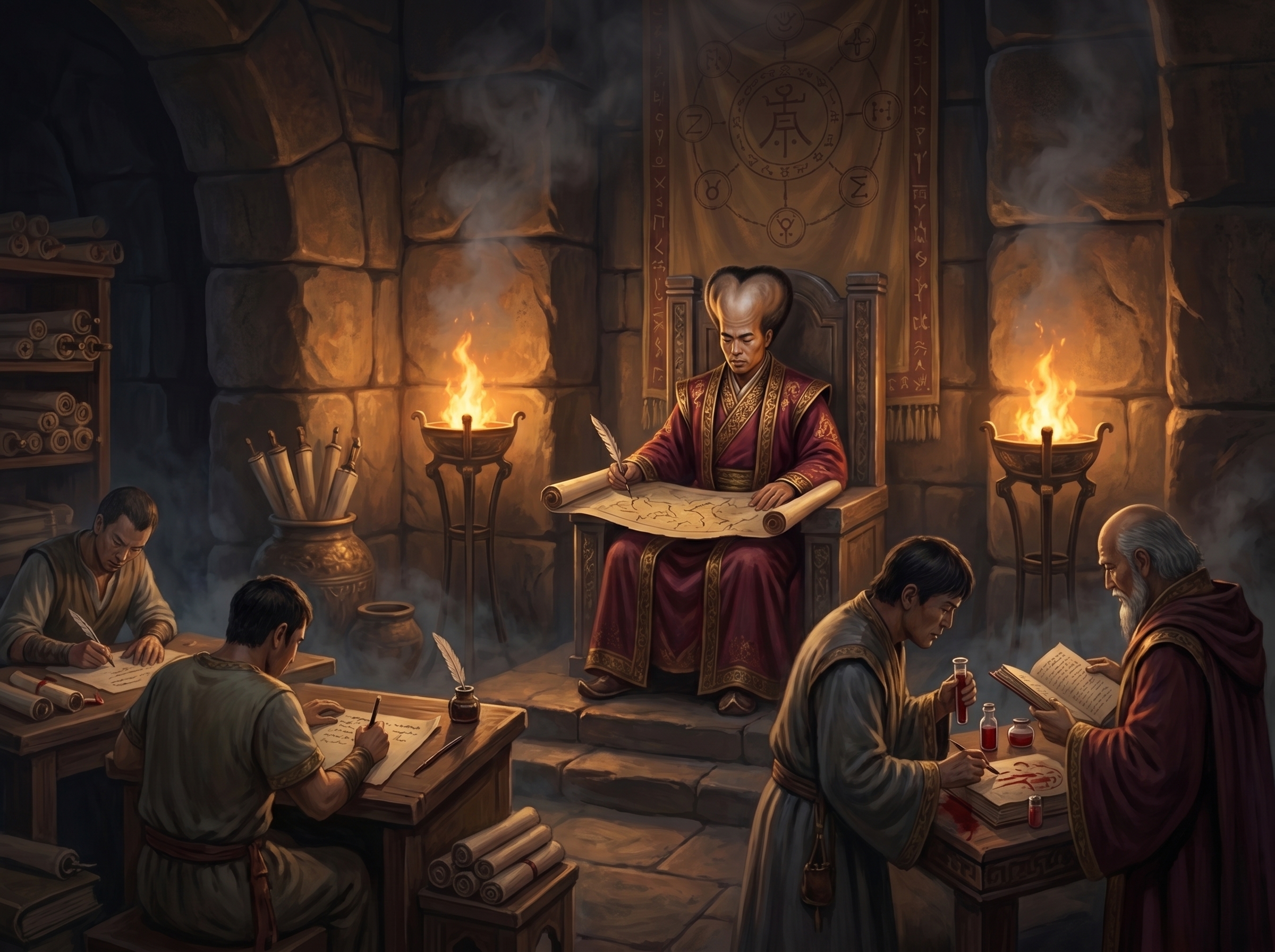
His name was not spoken in public temples. It was not sung by soldiers after victory. It was not etched into the coins of ordinary rulers. Yao Ke belonged to a deeper register of power — the hidden kind that does not beg to be seen because it has already arranged what others will see. He ruled from behind the curtain of events, from chambers lit by braziers and sealed by stone older than memory.
In those halls, scribes wrote what kings would later believe were their own thoughts. In those vaults, scholars studied the blood of dynasties as though history itself were a living creature to be cut open and remade.
He ruled from behind the curtain of events, from chambers lit by braziers and sealed by stone older than memory.
Yao Ke did not govern a nation alone. Beneath him stood the Twelve Seats of the Black Court — an inner order of silence and execution.
Around them moved scribes, guards, spies, midwives, record keepers, and oath-bound servants, all of them knowing that Yao Ke did not merely seek power over men. He sought power over the forces that made men what they were.
The Great Heresy
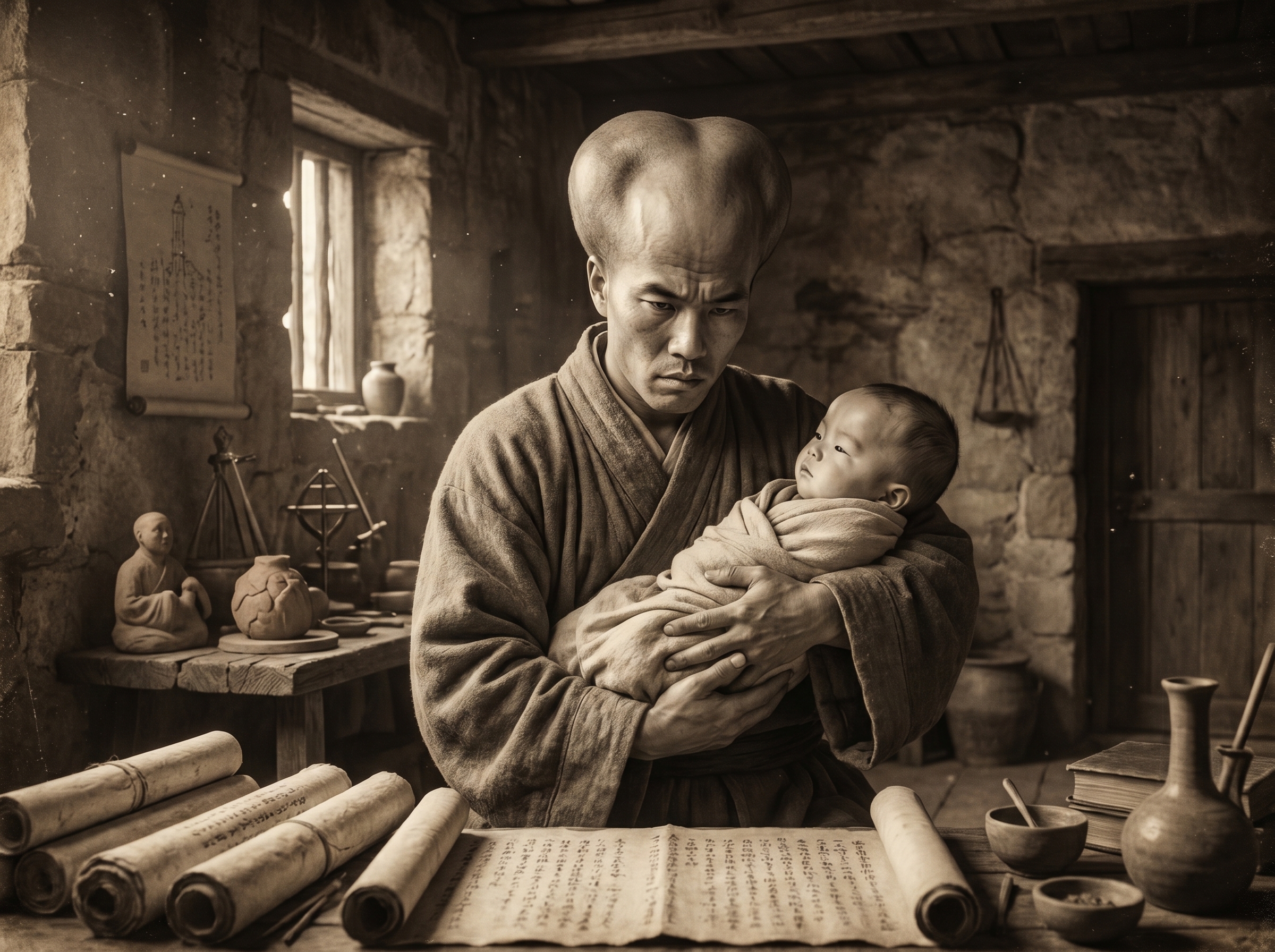
He believed the world had grown stagnant.
Not weak. Not dead. Stagnant.
To Yao Ke, this was worse than ruin. Ruin could be rebuilt. Stagnation hardened into false eternity. Men mistook repetition for truth, custom for destiny, inherited order for sacred law. Peace, he thought, had become concealment. It hid cowardice beside courage, vanity beside wisdom, hunger beside restraint. So long as the world remained unbroken, it would never reveal its true face.
From this conviction came his great heresy.
He would create a being not born to preserve the world, but to fracture it.
Not a servant in the ordinary sense. Not a prince to extend his line. Not a mere weapon to be pointed and released. He wanted something finer and more terrible than that. He wanted a son who would carry his doctrine into flesh — a mind shaped from the beginning to unsettle old certainties and bend history into confession.
Thus began the making of Yakub.
The Making
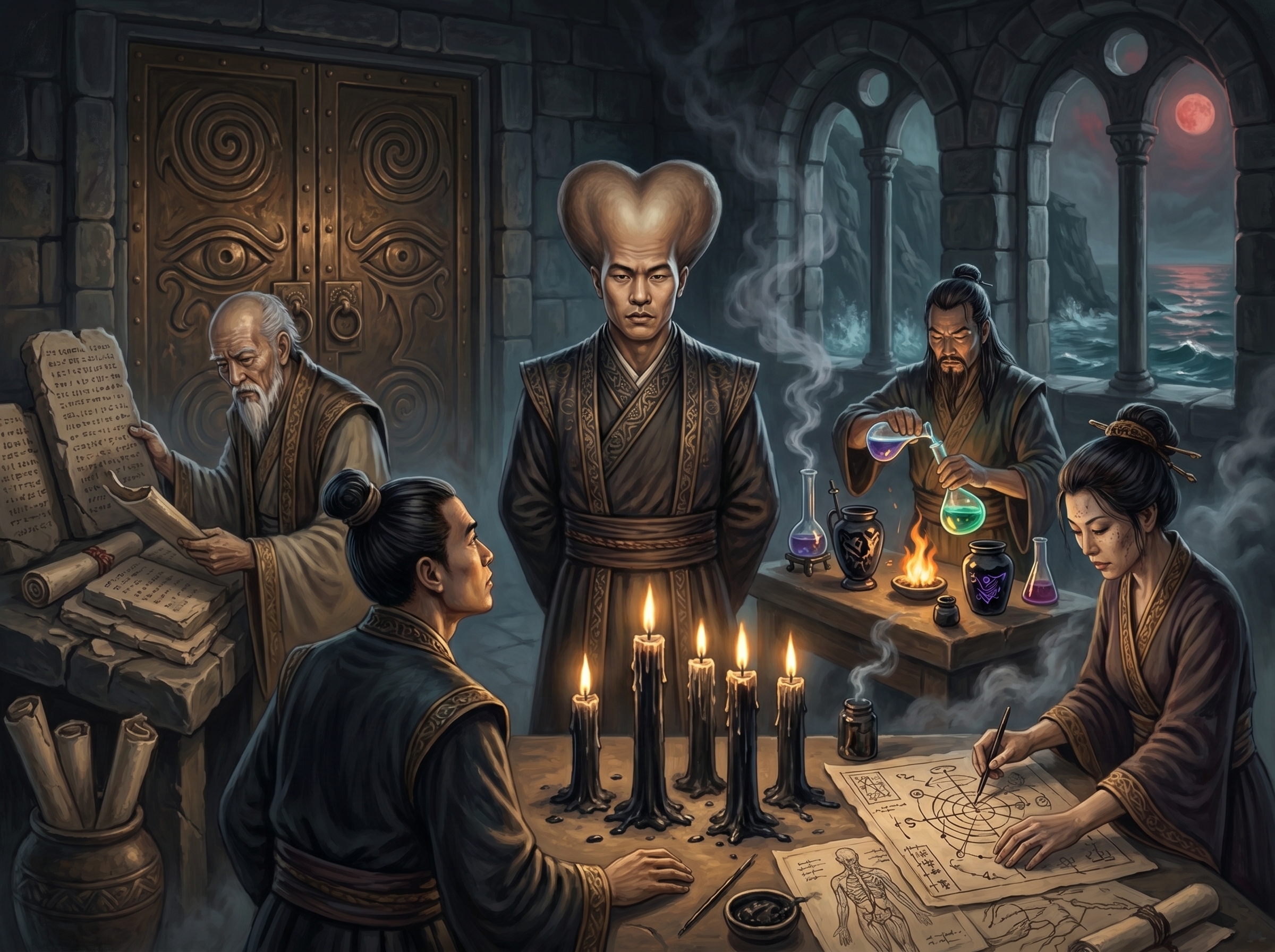
For years the Black Court prepared in silence. The Keeper of Records gathered ancient tablets concerning inheritance, temperament, and form. The High Alchemist distilled compounds from bitter herbs, mineral salts, oils burned under red moonlight, and stranger elements locked inside obsidian jars. The Matron of Lineage traced the qualities Yao Ke desired with ritual precision: intellect sharpened beyond comfort, will hardened beyond mercy, ambition that could not rest inside inherited limits.
In the sealed lower chambers of Yao Ke's stronghold, behind bronze doors carved with spirals and eyes, the preparations advanced with a patience no ordinary ruler could have sustained.
At the heart of it all stood Yao Ke, watching, correcting, refining. He did not speak often during the work. When he did, the room became still.
"Not obedience," he told the High Scholar one night, as wax dripped from seven black candles. "Obedience belongs to servants. I do not want a servant."
The scholar lowered his gaze. "Then what do you want, my lord?"
Yao Ke looked through the chamber's smoke toward the dark water beyond the cliffside windows.
I want a will so powerful it believes itself free, yet one whose shape was chosen before its first breath.
— Yao Ke, to the High ScholarNo one answered after that.
The Ritual Night
When the appointed night came, the sea below the fortress rose with storm-wind, striking the black stone foundations as if the world itself sensed the trespass. The War Marshal sealed the outer courts. The Master of Whispers dismissed even trusted attendants. Only the Twelve Seats remained.
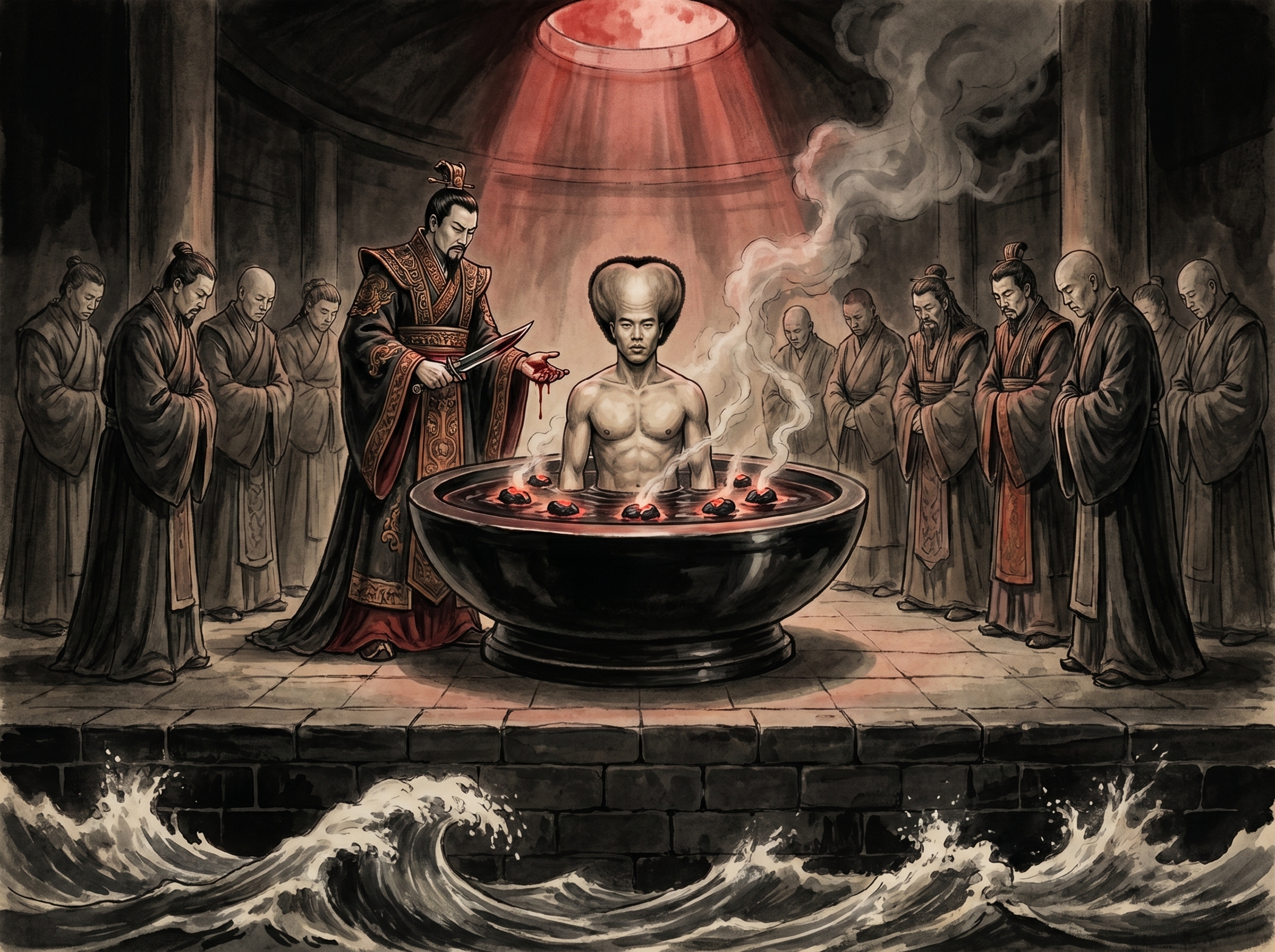
At the center of the ritual hall stood a basin of polished obsidian. Around it burned coals fragrant with myrrh, pine resin, and something sharper — metallic and bitter. Above, a narrow opening in the dome admitted a blade of red moonlight that fell across the basin like a wound.
Yao Ke approached in ceremonial robes of black, bronze, and deep crimson. In his hand he carried an obsidian knife honed so finely it seemed to vanish at the edge.
The age of concealment ends.
— Yao Ke, before the basinThen he cut his palm. Blood fell into the obsidian basin in slow, deliberate drops. The High Alchemist added the prepared oils. The High Scholar recited names of forgotten principles. The Master of Whispers extinguished every torch but the seven around the basin. When the final words were spoken, the chamber trembled.
From the basin rose first a shape, then a breath, then a body.
He was not born as ordinary children are born. He emerged formed, still, and terrible in his stillness. When at last he opened his eyes, the court drew breath as one.
"You hear me," Yao Ke said.
The being's lips parted. "I hear."
"You belong to me."
A pause. Then: "I belong."
The court bowed their heads, for the words had sealed it. "Your name," Yao Ke said, "is Yakub."
So Yakub entered the world not merely as son, but as design.
The Shaping
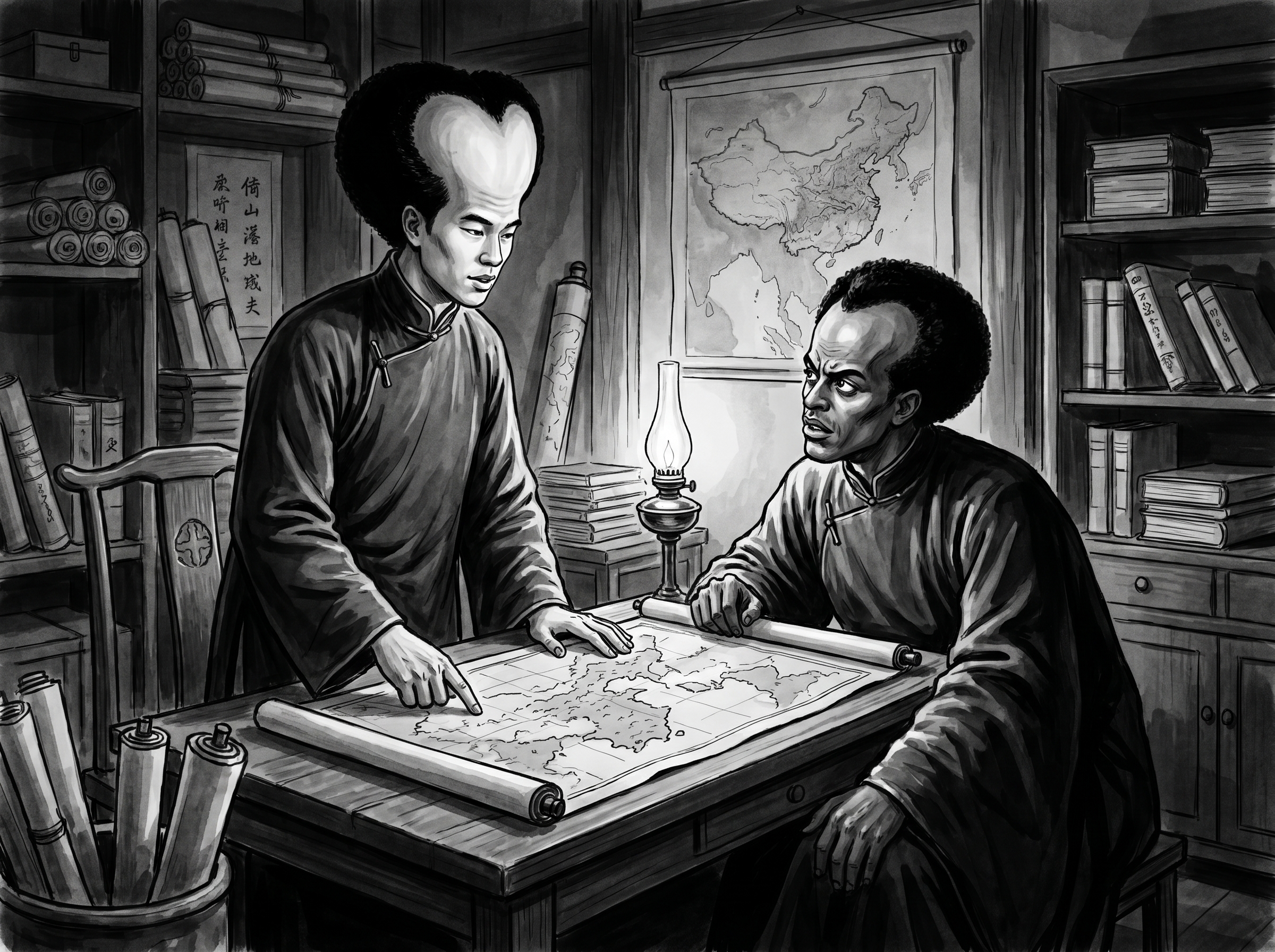
Yao Ke raised him in chambers no sunlight touched without permission. Yakub learned letters before lullabies, strategy before play, silence before speech. He was taught by the High Scholar in the architecture of ideas, by the Matron of Lineage in the patience of generations, by the War Marshal in discipline, by the Master of Whispers in human weakness — and always above them all by Yao Ke himself.
He showed him maps and asked not where rivers lay, but where men would kill to control them. He taught him that order is most fragile where it appears most complete, and that men call systems sacred only when they are terrified of seeing them altered.
"Why was I made?" Yakub asked one winter night.
"At first," Yao Ke said, "I believed the world could be awakened with ideas alone. I was wrong. Men hear only what threatens them."
Yakub's gaze sharpened. "Then I was made to threaten them."
"You were made," Yao Ke said, turning toward him, "to reveal them."
"The world hides from itself. It names habit law. It names inheritance truth. It names comfort peace. You will split those names open."
"And if the world resists?"
"It will. That is how we will know we have touched the bone."
The Masterpiece
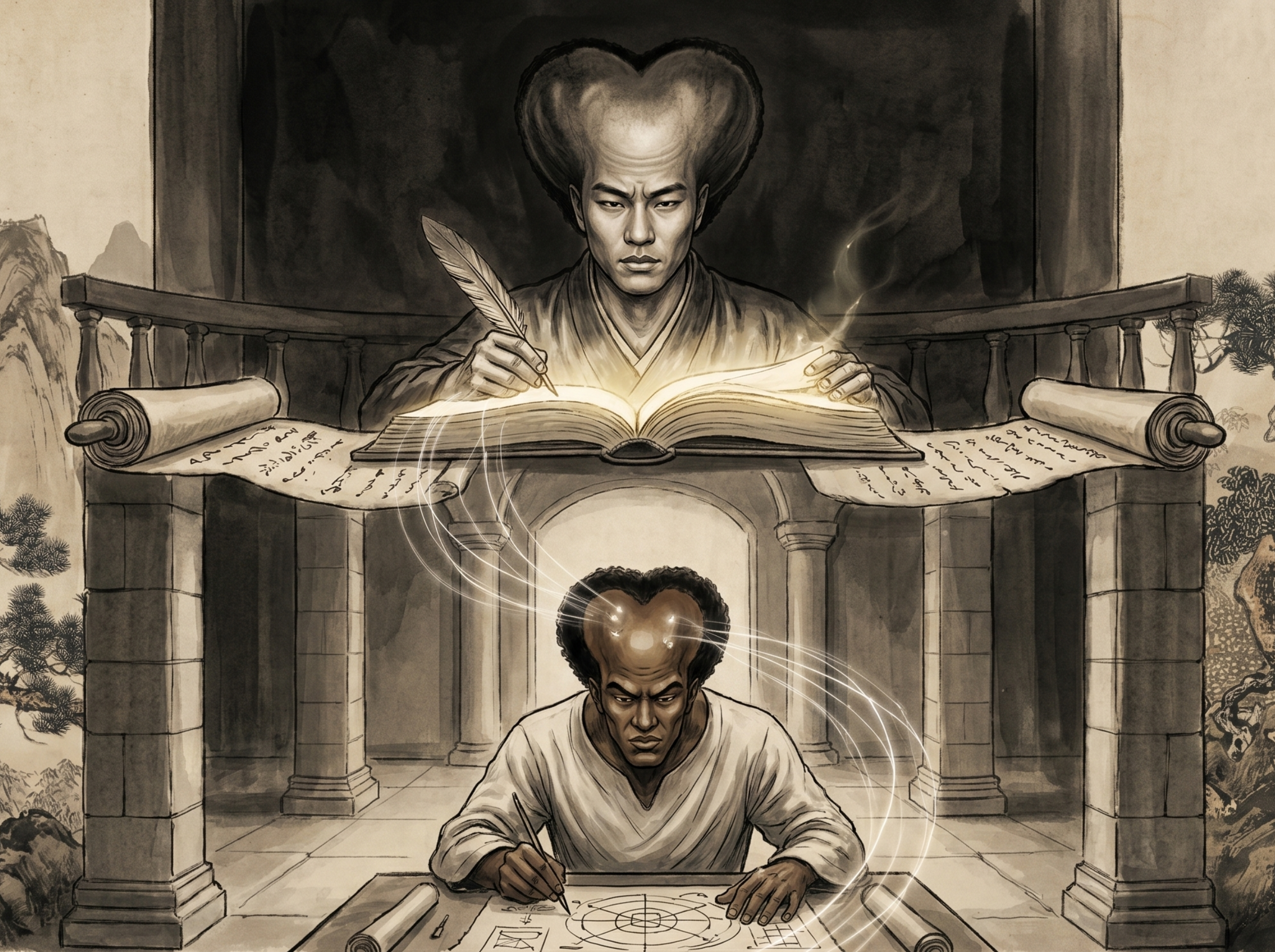
So Yakub grew into exactly what Yao Ke intended: brilliant, restless, severe. Yet the deepest mark of Yao Ke's design was not visible in his posture or intellect. It was in the chamber beneath his thinking — the unseen architecture of his will.
For Yakub believed his will was his own.
That was Yao Ke's masterpiece. The greatest control is not chains on the limbs, but authorship inside the mind.
Yao Ke did not order Yakub with shouted commands. He had no need. He had formed the principles by which Yakub interpreted the world. Yakub moved with conviction because his convictions had been planted so early and so perfectly that he mistook inheritance for selfhood.
The son moved. The father commanded.
The Release
Years passed. Rumors began to travel from the hidden fortress into the wider world. Merchants spoke of a pale-faced genius seen studying men as if measuring them. Sailors whispered of a thinker with a vast head and eyes like still water before a storm.
The War Marshal urged caution. "He is becoming visible."
The Master of Whispers bowed. "And therefore vulnerable."
But Yao Ke sat unmoved. "No," he said. "Now he becomes useful."
Yakub was never meant to remain hidden. He was meant to be released into history as a living breach — a force whose appearance would cause kingdoms to reveal what lived inside them: fear, hunger, cruelty, adaptability, worship, revolt.
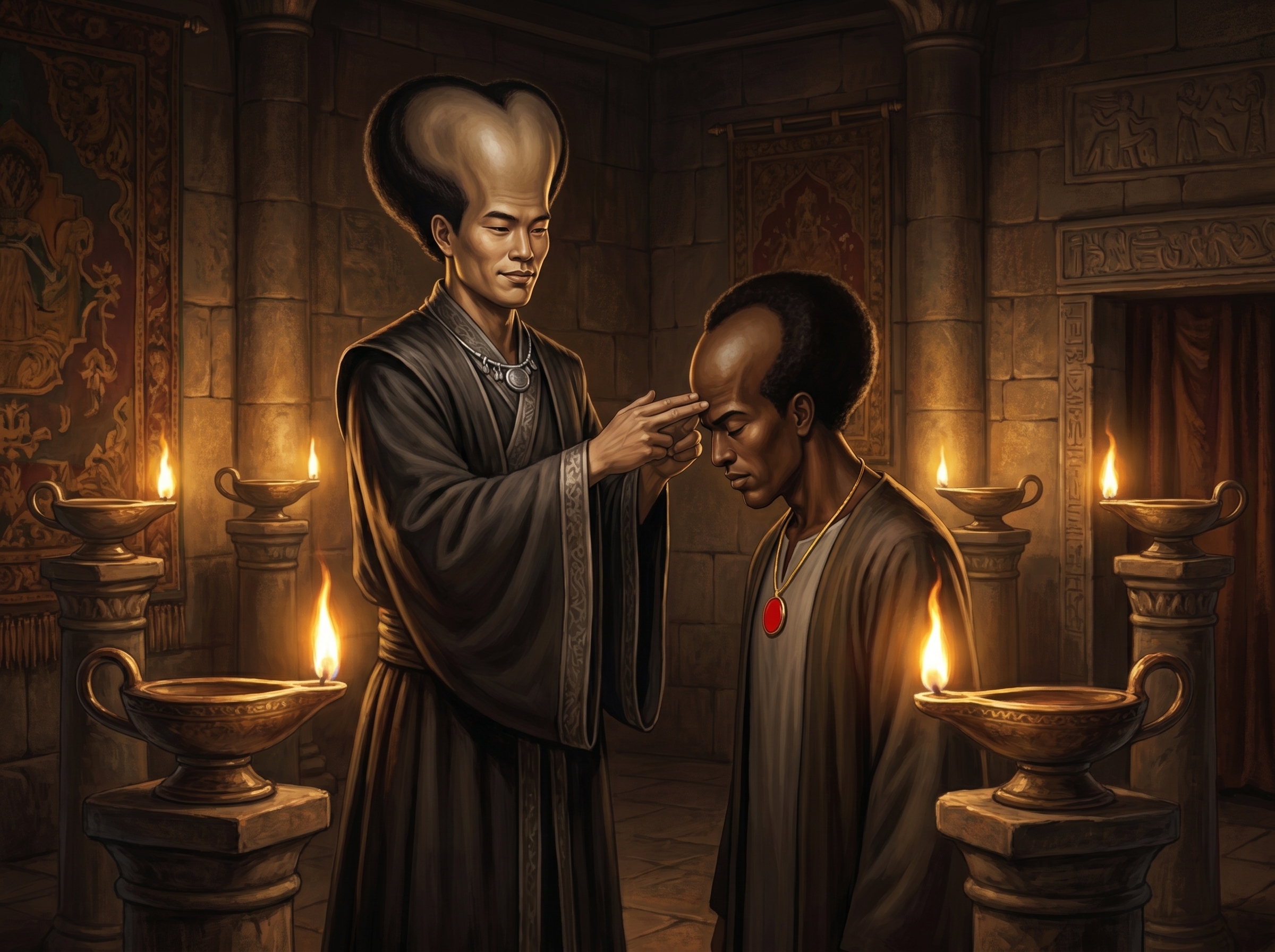
Before Yakub departed, father and son stood alone in the Hall of Seven Lamps. No scribes. No guards. No witnesses but the fire itself.
"And if I become greater than the design?" Yakub asked.
The slightest ghost of a smile passed across Yao Ke's face. "Then it will be because I allowed you to imagine greatness in those terms."
Yao Ke stepped forward and placed two fingers lightly against Yakub's brow. Not blessing. Not affection. Claim.
Go. Carry my silence into the world as thunder.
— Yao Ke, Hall of Seven LampsYakub bowed his head, and when he straightened, he was no longer merely son within a fortress. He was mission.
The Consequence
After that, the world began to change. Where Yakub walked, old orders became uneasy. Where he taught, divisions widened. Some called him genius. Others called him curse. But the world did not understand the deepest truth — the world saw only the moving figure and never the throne behind the motion.
For every fracture spreading across the earth was proof that his doctrine had entered the bloodstream of history. Through Yakub, Yao Ke had done what kings with armies and prophets with scriptures had failed to do. He had forced the age to answer for itself.
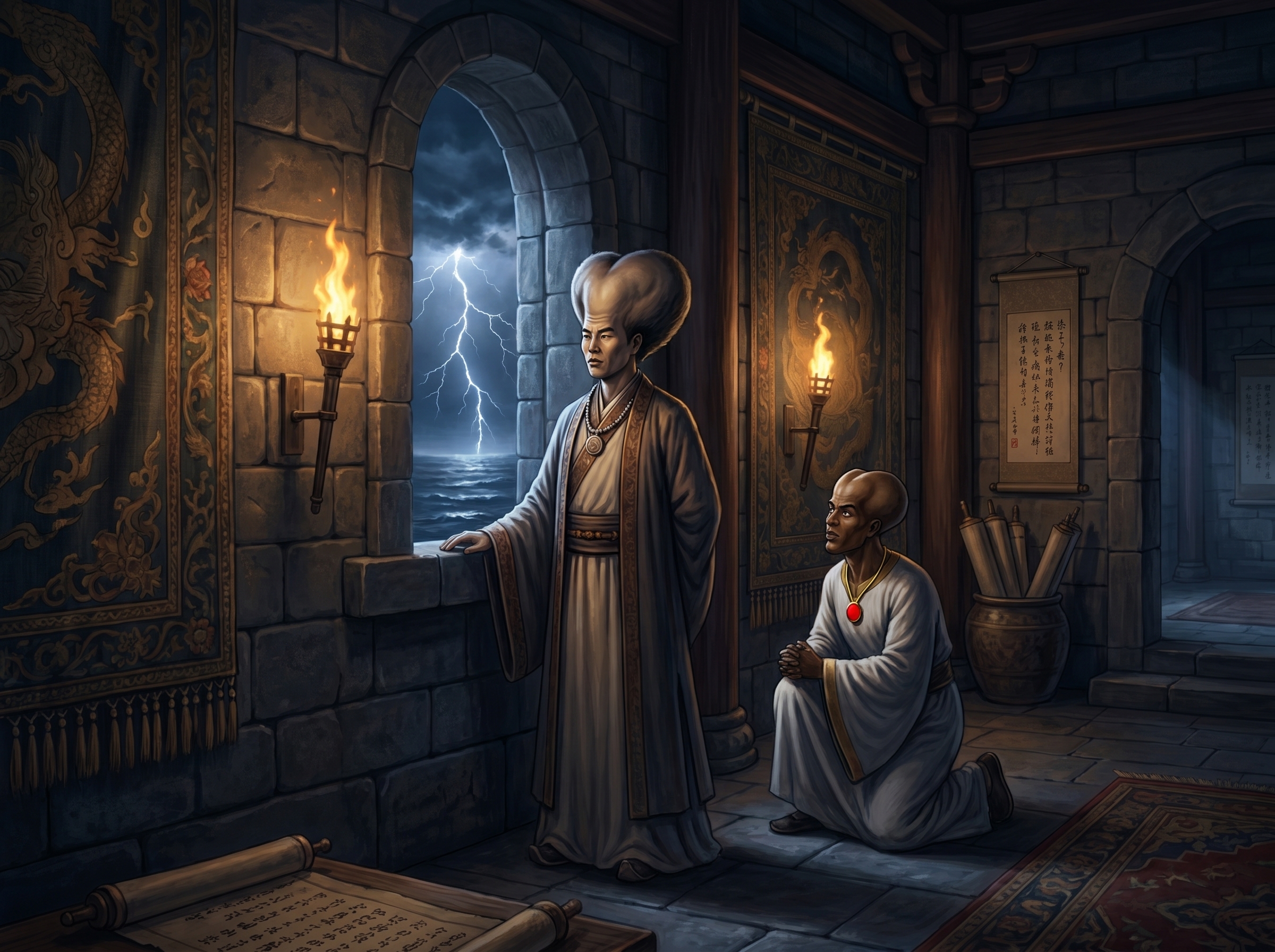
One night, alone in the highest chamber, Yao Ke stood before a narrow window as lightning flashed far out over the sea.
"My lord, has the world begun to move as you hoped?" the High Scholar asked.
Yao Ke did not turn. "It has begun to move."
"I created a son to fracture the age. But once a fracture reaches the foundations, even the architect cannot predict every path it will take."
Still, the next morning, the court convened as always. And Yao Ke, seated beneath the high carved vault of the inner hall, looked no less commanding than before. Because if he felt the shadow of consequence, he did not permit the world to see it.
That was his final discipline.
Thus the legend of Yao Ke and Yakub passed into whispers: of the father who did not merely beget a son, but authored him; of the hidden ruler who placed his will into flesh; of the son who walked the earth believing himself free while carrying the shape of his father's doctrine in every decisive act.
They said this instead:
When Yakub moved, history trembled.
When Yao Ke willed, Yakub moved.
And in the end, the most terrible creations are not the ones that escape their makers —
but the ones that fulfill them too well.